

This guide compares Mercury and Yamaha outboards head-to-head on performance and reliability, giving you the insights you need to choose the right fit for your boat.
About Mercury Marine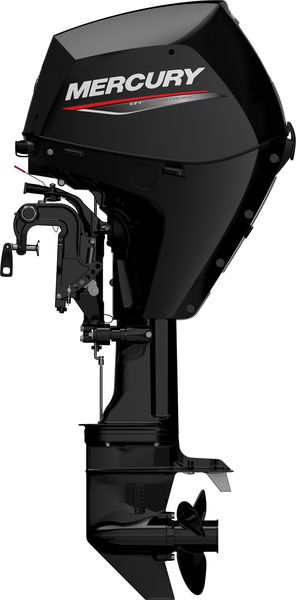
Mercury Marine, founded in 1939 and owned by Brunswick Corporation, focuses heavily on performance, integration, and digital control systems.
Mercury’s current outboard lineup ranges from 2.5 HP portable engines to 600 HP V12 Verado models, the highest-horsepower production outboard currently available. Their engines are commonly used on:
-
Offshore center consoles
-
Bass boats
-
Performance pontoons
-
Commercial and law-enforcement vessels
Notable Mercury technologies include:
-
V12 Verado platform (600 HP, steerable gearcase, 2-speed transmission)
-
Adaptive Speed Control (ASC) for load compensation
-
Digital Throttle & Shift (DTS) on mid-to-high HP models
-
Active Trim for automated trim adjustment
Mercury engines are often selected when top-end speed, acceleration, or multi-engine rigging is a priority.
About Yamaha Outboards
Yamaha Outboards, part of Yamaha Motor Corporation (est. 1955), emphasizes mechanical reliability, fuel efficiency, and long service life.
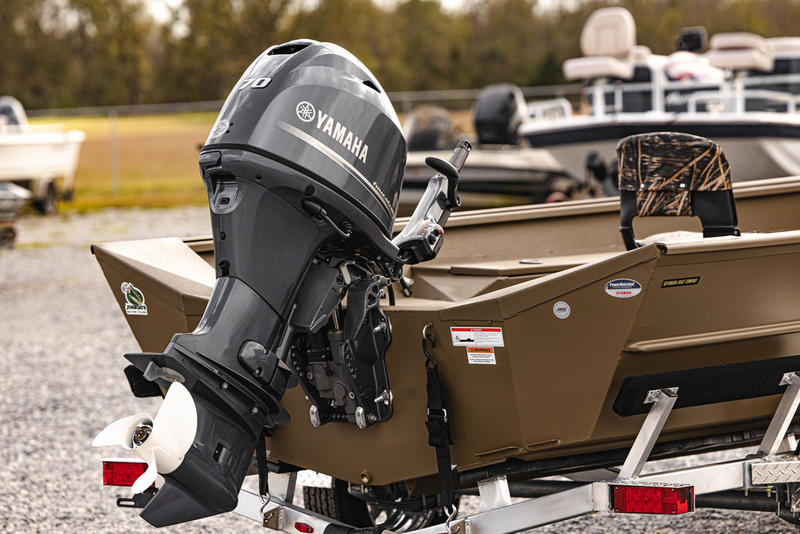 Yamaha outboards range from 2.5 HP to 450 HP, with the XTO Offshore 450 serving as their flagship high-horsepower model.
Yamaha engines are widely favored for:
-
Offshore fishing boats
-
Commercial fleets
-
Charter boats
-
Long-distance cruising
Key Yamaha technologies include:
-
XTO Offshore Direct Injection (DI) (naturally aspirated, no supercharger)
-
Variable Camshaft Timing (VCT) on mid-range engines
-
Plasma Fusion cylinder technology (corrosion and wear resistance)
-
Helm Master EX boat control system (joystick steering, autopilot)
Yamaha’s reputation is built around low failure rates and conservative engine tuning, especially for saltwater use.
Performance Comparison
1. Horsepower Range
|
Brand |
HP Range |
Standout Models |
|
Mercury |
2.5–600 HP |
300R, 450R, 600 V12 Verado |
|
Yamaha |
2.5–450 HP |
F300, F350, XTO 425/450 |
Key difference:
Mercury leads in ultra-high horsepower and performance racing segments. Yamaha caps at 450 HP but focuses on durability at sustained RPM.
2. Acceleration and Speed
-
Mercury uses supercharged and performance-tuned engines (e.g., Verado and Racing series), producing:
-
Faster hole shot
-
Higher top-end speed
-
-
Yamaha relies on naturally aspirated engines, prioritizing:
-
Linear power delivery
-
Lower mechanical stress over time
-
Real-world takeaway:
-
Watersports, bass fishing, or speed-focused setups → Mercury

-
Offshore cruising or commercial use → Yamaha
3. Fuel Efficiency
Fuel efficiency depends heavily on RPM band usage:
-
Yamaha engines typically achieve better fuel burn at cruise RPM (3500–4500 RPM)
-
Mercury engines may consume more fuel at cruise but deliver higher peak output
Example:
-
Yamaha F300 often reports 5–10% better fuel economy at cruising speeds compared to similar Mercury models, according to owner-reported offshore logs.
4. Noise and Vibration
-
Yamaha engines are tuned for lower idle RPM and reduced harmonic vibration
-
Mercury performance models trade quietness for responsiveness and power
Measured observations:
-
Yamaha idle noise is often 2–4 dB lower than comparable Mercury models
-
At wide-open throttle, noise levels become similar across brands
5. Handling and Maneuverability
Both brands offer joystick systems:
-
Mercury Joystick Piloting
-
Yamaha Helm Master EX
Differences:
-
Mercury integrates tightly with VesselView displays
-
Yamaha’s Helm Master EX includes SetPoint GPS positioning and autopilot features favored by offshore anglers
Neither brand clearly dominates — system preference often comes down to dealer setup and user interface comfort.
6. Durability and Longevity
With proper maintenance:
-
Both brands commonly reach 2,000–3,000+ engine hours
-
Yamaha engines are more often chosen for commercial fleets due to:
-
Conservative tuning
-
Fewer high-stress components (no superchargers)
-
Mercury performance models may require more frequent service intervals under aggressive use.
Reliability Comparison
Common Ownership Differences
|
Area |
Mercury |
Yamaha |
|
Maintenance sensitivity |
Higher on performance models |
More forgiving |
|
Saltwater corrosion resistance |
Very good |
Excellent (Plasma Fusion) |
|
Parts availability |
Strong |
Very strong |
|
DIY friendliness |
Moderate |
Higher |
 Known Trends
-
Yamaha owners report fewer electronic faults
-
Mercury owners report strong dealer diagnostic tools
-
Both brands suffer failures most often due to:
-
Neglected water pumps
-
Poor fuel quality
-
Missed service intervals
-
Making the Right Choice
Choose Mercury if you:
-
Want maximum speed or acceleration
-
Run multi-engine offshore setups
-
Use your boat for performance fishing or watersports
-
Prefer advanced digital engine data
Choose Yamaha if you:
-
Log long offshore hours
-
Prioritize fuel efficiency and longevity
-
Operate in saltwater year-round
-
Value mechanical simplicity and resale confidence
Final Verdict
There is no universally “better” outboard — only a better fit.
Mercury excels in performance engineering and power density, while Yamaha leads in long-term reliability and fuel efficiency. Your decision should be driven by how you use your boat, not brand reputation alone.